Small Bathroom Storage Ideas: How to Organize Every Inch Without Crowding the Room
A bathroom can have perfectly good fixtures, an attractive mirror, and freshly cleaned floors—and still feel crowded the moment two people start getting ready. Toothbrushes compete for counter space. Hair tools disappear beneath the sink. Towels pile up because there is nowhere convenient to put them. An extra package of toilet paper lives on the floor, while half-used toiletries take over every available shelf. The solution is not always a remodel or even a bigger cabinet. The most useful small bathroom storage ideas begin with finding out which items deserve space in the room, then choosing storage that fits the actual layout. At My Home Treasure Trove, exploring bathroom furniture and home accessories can be part of that process—but a thoughtful plan should come before the shopping cart.
Small bathrooms present a particular challenge: nearly every inch already has a job. The sink needs room for washing, the toilet needs comfortable access, the shower or tub needs a clear entry, and the door must open freely. A storage unit can technically fit along a wall while still making the room frustrating to use. More cabinets are not necessarily better if they block movement, conceal items you need every morning, or add surfaces that collect clutter.
Fortunately, useful storage doesn't have to be complicated. Sometimes a narrow cabinet makes the difference. Other times, the answer is a divided vanity drawer, a carefully measured shelf, or moving backup products out of the bathroom entirely. This guide walks through organizing what you own, measuring potential storage areas, comparing furniture options, accommodating children or guests, and protecting your belongings from bathroom moisture. The goal is a room that's easier to use on a busy weekday—not simply one that looks neat for five minutes.
Begin With the Clutter, Not the Cabinets
Before buying an organizer, open the drawers and cabinets you already have. Look at the vanity top, the shower ledge, the space behind the door, and the baskets that seem to fill themselves. What exactly is creating the problem?
One bathroom may have plenty of total storage but no convenient location for everyday toiletries. Another may contain an entire year's supply of extra products in the cabinet that should hold the hair dryer. A third may have no built-in storage at all. These situations require different solutions.
Sort the contents into four categories: items used daily, items used weekly or occasionally, backup supplies, and items that do not belong in the bathroom. Include the things you've been storing in nearby bedrooms or hallways because they have no designated place in the bathroom. This exercise will help you plan realistically instead of choosing furniture based on an empty-looking corner.
Also notice where clutter naturally forms. If everyone leaves toothbrushes on the counter, the everyday storage may be too inconvenient. If clean towels migrate to a bedroom chair, there may be no accessible towel location. If you're always digging for extra toilet paper, backup storage may be hidden too deeply.
A useful bathroom storage system makes the next step easier. It should take less effort to return an item to its place than to leave it sitting out. The same practical approach applies to other busy household zones, as explored in our entryway furniture ideas guide.
Decide What Truly Needs to Stay in the Bathroom
A small room cannot store everything indefinitely, and it doesn't need to. Daily essentials should get the most accessible locations; occasional items can live higher, lower, or outside the room.
Start with the contents you reach for during a normal morning and evening: toothbrushes, personal-care products, grooming tools, and frequently used towels. These belong near the locations where they're used, provided that placement is suitable for the products and the household.
Next consider extras. Do you need six spare shampoo bottles in the vanity, or could most backups go in a hall closet? Would only two sets of towels fit better than an entire linen collection? Is there an unopened travel-size collection occupying prime drawer space?
Having fewer things in the bathroom isn't the same as owning fewer things overall. It's about assigning the room a manageable role. You can still maintain a household supply elsewhere, with a small, convenient reserve close at hand.
Be especially selective about products sensitive to heat, humidity, or access by children. Not everything sold in a bathroom aisle should be stored next to a steamy shower. Product labels and safety instructions should guide those decisions.
Measure Your Space as It's Actually Used
Measuring a wall is not enough. You need to measure the storage footprint and how the bathroom works when a door, drawer, or cabinet is open.
Write down the width, depth, and available height of each promising area. Then check the practical obstacles: door swings, towel bars, light switches, outlets, plumbing, baseboards, vents, toilet-tank access, and the opening of vanity drawers. A cabinet might fit between the sink and toilet when closed but interfere with the person standing at the sink.
For freestanding furniture, check the widest point of the unit, including any legs, trim, or handles. For a wall cabinet, note how far it projects into the room and whether its doors would open toward a mirror or another fixture. For shelving, think about both the object being stored and the hand space required to retrieve it.
Use removable painter's tape to outline the proposed footprint on the floor or wall. Open the bathroom door, step to the sink, sit on the toilet, and move through the space as you normally would. If you're planning an over-the-toilet unit, be sure you can still access the tank and clean behind the fixture.
In a bathroom shared by several people, test the busiest routine. The storage should work when one person is brushing their teeth and another needs to reach the cabinet—not only when the room is empty.
Create Storage Zones Instead of One Giant Catch-All
A good storage plan divides the bathroom into small zones based on activity. The sink area handles everyday personal care. The bathing area holds items used in the shower or tub. A nearby cabinet can contain clean towels and spare supplies. Less convenient locations can hold infrequently used items.
This doesn't require buying matching bins for every surface. It requires deciding what belongs where and giving each category a predictable home.
For example, keep daily grooming products in one accessible drawer instead of spreading them across three shelves. Put replacement toiletries in a single labeled container rather than burying them among cleaning supplies. If extra washcloths are frequently used, give them an easy-to-reach shelf rather than stacking them behind rarely used items.
The most common mistake is making the most attractive storage location the home for everything. A beautiful basket on an open shelf quickly becomes a miscellaneous container if nobody has decided what it should hold.
Think of storage zones as simple instructions your bathroom gives the people using it. Clear categories reduce searching, duplicate purchases, and the slow return of clutter.
Make the Most of the Vanity You Already Have
For many small bathrooms, the vanity provides the largest existing storage area. Before replacing it, look for wasted space inside.
A broad cabinet without organizers often becomes a heap of bottles. Tall products gather toward the front, smaller ones disappear behind them, and the space above the shortest containers remains unused. Instead of assuming the vanity is full, look at its vertical and horizontal layout.
Low bins can separate categories without forcing you to empty the entire cabinet to reach one product. Pull-out organizers may help when the depth makes items at the back difficult to see. Stackable containers can be useful, but only if the upper container can be moved safely and easily.
Check that organizational pieces will not interfere with pipes or fittings. Avoid placing containers where they press against supply lines or make leaks hard to notice. A removable liner can simplify cleanup in suitable cabinets, but it should never hide persistent moisture or a plumbing problem.
Think about how your household actually reaches things. Frequently used items belong toward the front. Bulky extras can occupy less convenient areas. A neat arrangement is only successful if you can retrieve and return objects without dismantling it every day.
Organize Around the Plumbing Under the Sink
Under-sink storage requires more planning than an ordinary shelf because drains, traps, and supply lines interrupt the usable space. A bin that looks ideal on a product page may not fit once it meets the pipes.
Measure the inside width and depth of the cabinet, then locate the pipes and any valves. Record the usable height to either side of the plumbing, not just in the center. Check whether the cabinet doors or hinges narrow the opening through which an organizer must pass.
A pair of smaller bins may fit around the plumbing better than one wide tray. A removable pull-out unit can sometimes make the deepest items more accessible, provided it doesn't obstruct maintenance access. Adjustable organizers offer flexibility, but verify their assembled dimensions before ordering.
Keep categories simple: everyday backups in one container, spare paper products in another, and approved household cleaning items in a separate, appropriately secured area. Follow product-label instructions, particularly for cleaners that need to be kept away from children and from incompatible products.
Leave the plumbing visible enough to spot drips and reach shutoff valves. Organized storage should improve the cabinet, not turn a small leak into a surprise because everything is packed too tightly.
Bathrooms With Pedestal Sinks Need a Different Plan
A pedestal sink has a graceful, open appearance, but it typically offers little or no built-in storage. Trying to recreate an entire vanity's capacity around its base can make the bathroom feel crowded.
Instead, decide which items really need to be near the sink. A narrow shelf, a compact wall cabinet, or a small freestanding unit might hold the essentials without covering the floor with baskets. Sometimes a mirror cabinet provides a particularly efficient solution because it adds storage where a mirror would already hang.
Think carefully before placing furniture beneath or directly beside the basin. You need room to stand, access the plumbing, and clean the floor. A decorative basket might be suitable for rolled hand towels, but it isn't automatically an effective place to store everything used in the room.
If you rent, check what installation methods are permitted. Avoid assuming that removable accessories can safely carry the weight of a loaded shelf; follow each product's instructions and weight limits.
With a pedestal sink, a few carefully selected storage locations often outperform a crowded collection of small containers.
Over-the-Toilet Storage: Useful Space With Important Limitations
The wall above the toilet is often overlooked, so it can be tempting to buy the first shelf unit that seems to fit. But this area requires specific measurements.
Freestanding over-the-toilet units usually have legs that extend alongside the toilet and shelves above the tank. Measure the toilet's overall width, the wall clearance on both sides, the tank height, and the available height above it. Also check the depth of the proposed unit and where its legs will actually stand.
The bottom shelf should not prevent removal of the tank lid or access needed for maintenance. A cabinet or shelf shouldn't crowd someone's head or shoulders when the toilet is used. Doors need space to swing without hitting fixtures or walls.
An open unit can hold neatly arranged towels, baskets, and spare paper products. A closed cabinet can reduce visual clutter when you're storing several small items. Neither is automatically better; the choice depends on what will live there and whether the storage is easy to use.
Safety matters. Freestanding doesn't necessarily mean no anchoring is needed. Follow the manufacturer's instructions for assembly and securing the unit. Avoid loading high shelves with heavy objects or leaving items where they could fall into the toilet or onto a person.
Properly measured, over-the-toilet storage can be helpful. Poorly measured, it may create more inconvenience than the clutter it was intended to solve.
When a Bathroom Wall Cabinet Is the Better Choice
A wall cabinet can add concealed storage without taking floor space, making it attractive for a tight bathroom. It may be especially useful when you want to hide spare toiletries, grooming supplies, or smaller items that make open shelves look busy.
Before choosing one, decide how its doors will open. A cabinet directly beside a door frame, shower enclosure, or large mirror may look fine when closed but become difficult to use. The shelf depth also matters: deep shelves can hide small products behind larger bottles, while extremely shallow shelves may not accommodate what you need to store.
Adjustable shelves can help organize differently sized objects. Interior organizers can create smaller categories, but only if they fit without preventing the doors from closing.
Wall cabinets must be installed into an appropriate supporting surface using the hardware and methods required for the product and wall construction. Bathrooms may have concealed plumbing or electrical services, so installation is a job to approach carefully; seek qualified help when the mounting conditions are uncertain.
A wall cabinet succeeds when it is safe, reachable, and appropriately sized—not merely because it leaves the floor open.
Tall, Narrow Cabinets and Linen Towers
A slim storage cabinet can offer considerable organization in a modest footprint. These units may be useful in bathrooms with a narrow open wall or a gap that isn't suited to wider furniture.
However, a narrow cabinet isn't automatically a space-saving choice. A cabinet that's too deep can block the pathway to the sink or interfere with an open bathroom door. Tall units can feel visually imposing in a room with low ceilings or several other wall-mounted elements.
Look at how the interior is divided. Shelves may suit folded towels and supplies, while drawers may be better for smaller objects. Decide whether doors need to swing toward a wall, and confirm they will open far enough to make the interior accessible.
Check stability requirements and follow manufacturer anchoring instructions. Tall storage should never be treated as a climbing surface or left unsecured where the product requires attachment.
If the cabinet is intended to hold linen, measure the actual folded towels rather than guessing shelf capacity. A narrow, well-organized cabinet can be more useful than a much larger one that doesn't match the size of what you need to store.
Freestanding Bathroom Cabinets: When Floor Space Is Available
Sometimes a compact floor cabinet is more practical than a wall installation. It may offer shelves or drawers without changing the mirror or existing vanity, and in some homes it can be repositioned when storage needs change.
The trade-off is floor space. Before choosing a freestanding cabinet, check whether someone can still move comfortably between the sink, toilet, and tub or shower. Make sure the cabinet doesn't cover a floor vent or restrict an access panel.
Also consider cleaning. If a unit sits tight against a wall and close to a shower, will moisture collect beneath or behind it? Can you clean around the base? Is its finish suitable for the room's humidity and occasional splashes?
A cabinet that looks compact from the front may project surprisingly far outward. Compare the depth with the available walkway instead of concentrating only on width.
A freestanding piece makes sense when it provides useful storage without creating a permanent obstacle in a room where the floor is already doing a lot of work.
Open Shelves or Closed Cabinets: Which Should You Choose?
Open shelves are convenient for towels and the few items you reach for frequently. They can make a bathroom feel airy and give you an opportunity to introduce texture with neatly folded linens or a suitable decorative accent.
But open storage makes everything visible. If you have many small containers, packages, and grooming products, the shelves can begin to look cluttered even when they're technically organized. Their contents are also more exposed to dust and bathroom moisture.
Closed cabinets hide visual clutter and can create a quieter appearance. They may be especially useful for backup supplies and products with inconsistent packaging. Their disadvantages include needing room to open doors and sometimes making items at the back harder to see.
A combination often works best: one open location for things that are attractive or used daily, with closed storage for the less orderly extras. This approach helps maintain both convenience and visual calm.
You don't need to make every storage piece match. Focus on a consistent purpose for each location, and choose finishes that relate to the room's existing fixtures and furniture.
Make a Mirror Work Harder With Concealed Storage
If wall space is scarce, consider whether the mirror could also provide storage. A mirrored cabinet can combine two functions within one wall area, potentially making it more useful than a plain mirror above a crowded sink.
Measure the available width and height, and check the depth of the cabinet. Make sure the door can open without striking nearby lighting, shelving, faucets, or the bathroom door. Verify that the mirror height works for the people using it rather than simply aligning the cabinet with the nearest tile line.
Before replacing an existing mirror, also consider its visual role. A large, simple mirror may make a small room feel more open. A deep, bulky mirror cabinet could create a different impression. The appropriate choice depends on the room's proportions and how badly you need storage.
Mirrored cabinets are not a requirement for an organized bathroom. They're one option worth considering when storage and mirror space must share a small wall.
Organize Towels Without Filling Every Shelf
Towels occupy more room than many everyday toiletries, so they deserve their own plan. Begin by deciding how many towels the bathroom actually needs to hold.
A small shared bathroom may only need the towels in use plus a modest reserve. Extra sets can live in a linen closet, bedroom cabinet, or another clean and dry storage location. Keeping every household towel inside a tiny bathroom can crowd out more essential items.
Then choose a storage method that fits the space. Folded towels can go on a cabinet shelf. Rolled washcloths may fit in a suitable basket. Hooks and bars can provide places for towels in use, provided the arrangement allows them to dry and doesn't overlap with doors or other fixtures.
Keep clean, dry linen away from locations likely to be splashed. Avoid sealing damp towels inside closed containers, where moisture may linger. If the bathroom has ongoing humidity problems, storing the majority of clean linen elsewhere may be sensible.
The point is not to make a picture-perfect stack. It's to make clean towels easy to locate and used towels easy to hang.
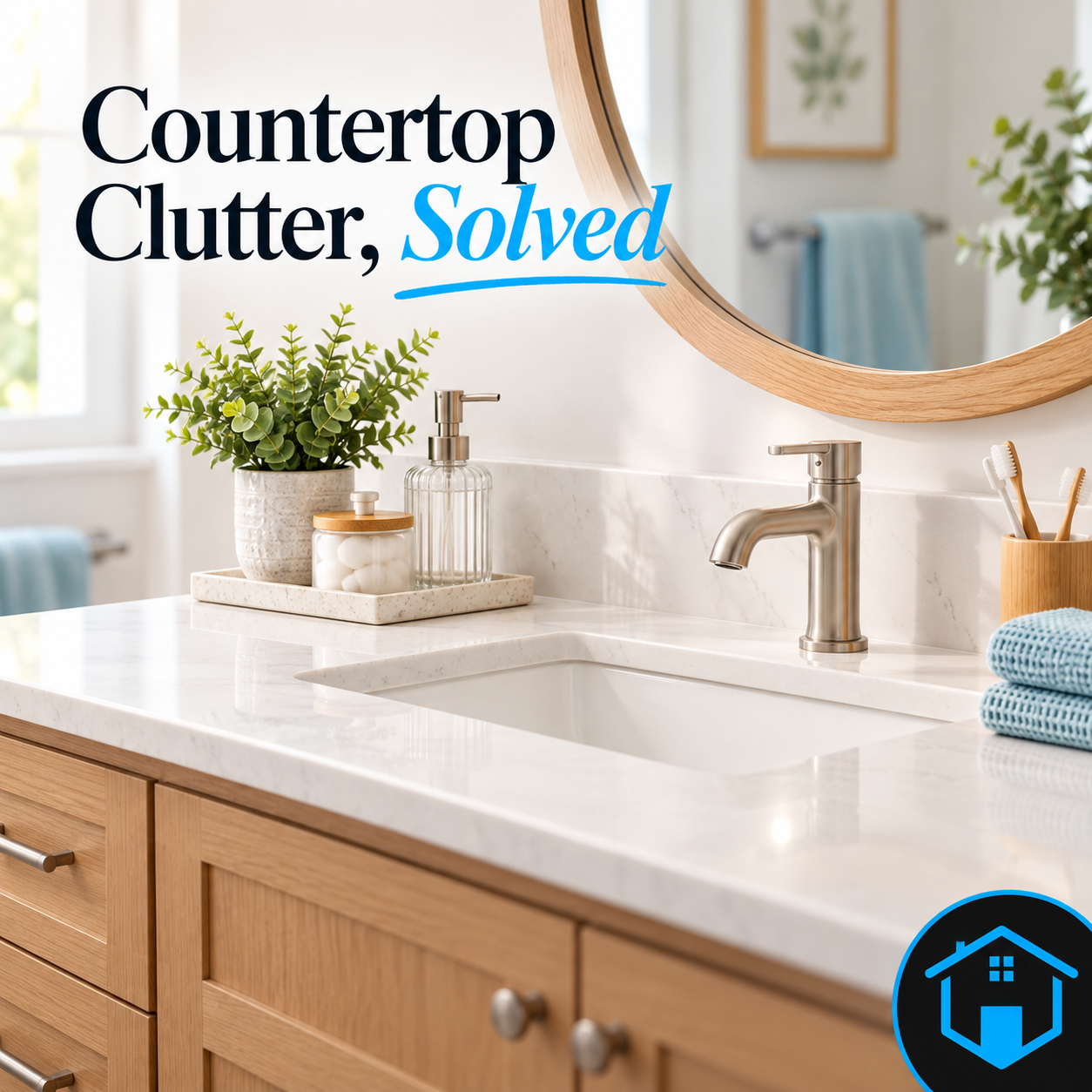
Clear the Counter Without Hiding Daily Essentials
The bathroom counter is useful working space. It needs room for handwashing, getting ready, and temporarily setting down items. Covering it with several baskets doesn't necessarily solve clutter; it can simply create more objects to clean around.
Start by removing everything and putting back only the items used at the sink on an ordinary day. If toothbrushes, soap, and a few essentials are all that's needed, let the surface stay mostly open.
A small tray can define a group of items and make cleaning easier, but it shouldn't become a permanent catch-all. A wall shelf or drawer may be preferable for products that don't need to remain visible.
Think about the splash zone. Decorative materials and containers should be appropriate for their location, and electrical grooming devices should be stored and used according to their safety instructions, away from water when required.
A clear counter doesn't have to be bare. It simply needs enough available area for the tasks that happen there.
Bathrooms Shared by Children or Several Adults
Shared bathrooms need organization systems that different people can understand quickly. A single large cabinet can work, but without defined categories, one person's products gradually bury everyone else's.
Consider grouping personal items in individual containers or designated drawer sections. Everyday communal supplies, such as soap and toilet paper, can have shared locations. Frequently used items should be accessible to the people who need them, within appropriate safety limits.
Children's storage deserves special thought. A lower shelf might help with harmless everyday belongings, but medications, sharp objects, and household chemicals require secure storage out of children's reach and in accordance with their labels. Storage convenience must never come before safety.
In a household with different morning schedules, the organization should also minimize crowding. If everyone needs the same drawer at once, consider redistributing belongings to separate locations.
Keep the labels and divisions simple. A bathroom that several people use should not depend on one person's memory of a complicated system.
Storage Solutions for Renters
Renters often face an extra constraint: permanent installations may not be allowed. Before drilling or mounting anything, check the lease and obtain permission where required.
Freestanding cabinets, appropriately installed tension systems, and removable accessories may be possibilities depending on the particular bathroom and the products' instructions. However, no-drill does not automatically mean damage-free or safe for any load. Adhesives may fail on damp or unsuitable surfaces, and freestanding tall units may still require anchoring.
Measure carefully before purchasing temporary furniture. A piece that blocks the bathroom door isn't more practical merely because it can be moved later.
If permanent mounting is prohibited, prioritize organizing existing drawers and cabinets first. Small removable bins and dividers can create substantial improvement without adding new furniture.
Choose accessories that can travel with you if you move, but avoid treating portability as more important than stability or everyday use.
Plan Around Bathroom Moisture
Bathrooms aren't ordinary storage rooms. Showers, baths, and sinks create damp conditions that may affect furnishings, toiletries, and textiles. Material choice and ventilation therefore matter as much as dimensions.
Before choosing a cabinet, examine the manufacturer's guidance for bathroom suitability, finish care, and placement. Painted wood, engineered wood, metal, plastic, and other materials can perform differently depending on their construction and protective finishes. Don't assume any material is completely unaffected by moisture.
Keep furniture out of recurring splash areas when possible. Wipe up standing water, attend to leaks promptly, and leave enough access around cabinets to clean and inspect surfaces. A cabinet that conceals persistent dampness isn't an improvement.
The U.S. Environmental Protection Agency recommends adequate bathroom ventilation to help remove moisture and discourage mold growth. Make sure the room's ventilation works properly and follow appropriate maintenance guidance.
Open shelves can expose supplies to damp air; closed doors aren't a substitute for moisture control. Store sensitive belongings elsewhere if their instructions call for cooler or drier conditions.
What Should Not Be Stored in a Steamy Bathroom?
It may seem natural to keep all grooming and health-related items in the bathroom, but some products need different storage conditions.
Medication is an important example. MedlinePlus explains that bathroom heat and moisture can damage medicines, and advises checking storage directions and asking a pharmacist when necessary. A secure, cool, dry location outside the bathroom may be more appropriate for many medicines.
Follow the labels for cosmetics, personal-care products, and electrical devices as well. Avoid storing items in places where they will be repeatedly splashed, overheated, or exposed to conditions the manufacturer warns against.
Cleaning chemicals should remain in appropriate containers and be secured according to their labels, especially where children or pets may access the room.
The goal is not to move every object elsewhere. It is to make thoughtful decisions about what the bathroom environment is suited to storing.
Furniture Safety and Wall Anchoring
A tall cabinet or shelving unit should never be selected without considering stability. Bathrooms may be small, but their limited space can make it tempting to use very tall, narrow pieces loaded with supplies.
Follow the manufacturer's installation and anchoring instructions. Wall-mounted furniture needs mounting suitable for the structure and load. Freestanding furniture may require anti-tip hardware even when it doesn't look particularly heavy.
The U.S. Consumer Product Safety Commission's Anchor It program emphasizes securing top-heavy furniture and following manufacturer directions to reduce tip-over hazards.
Do not place heavy items high above someone's head merely to create additional storage capacity. Keep frequently used items comfortably reachable, and avoid storing objects that might encourage children to climb furniture.
Safety belongs in the initial shopping decision, not as a final detail after the cabinet is assembled.
Make the Bathroom Look Calm Without Overdecorating
Storage affects the appearance of a bathroom even when the furniture itself is attractive. Several open shelves crowded with mismatched packaging can look busy, while a single oversized cabinet can make a small room feel cramped.
Choose a few clear visual relationships. A cabinet finish might echo the vanity, a mirror frame, or existing hardware. Baskets or containers may share a general color family without requiring every piece to match exactly.
Use open storage selectively for folded towels and a few suitable everyday objects. Closed storage can hide the extra packaging, spare supplies, and small items that don't contribute to the room visually.
Leave some open space around decorative accessories. A vase or small piece of wall décor may add character, but it shouldn't block access to a shelf or occupy the only available working surface.
For additional ideas on selecting accents that serve a room rather than crowd it, see our article about stylish home décor accents.
Common Small Bathroom Storage Mistakes
Buying Before Measuring
A cabinet may fit an empty wall while blocking a door, toilet access, or cleaning route. Measure the full footprint and operating clearance before ordering.
Using Every Available Wall
More shelves can make a small bathroom feel busy and harder to clean. Add storage only where it solves a recognized need; leave some visual breathing room.
Keeping All Backup Supplies in the Bathroom
A year's worth of products can displace everyday essentials. Store a manageable reserve in the room and move the remainder to a suitable location elsewhere.
Choosing Deep Cabinets for Narrow Spaces
Depth often causes more trouble than width. Compare how far a cabinet projects into the walkway, not just whether it fits against the wall.
Ignoring Toilet and Plumbing Access
Over-toilet shelves should not obstruct tank maintenance. Under-sink organizers should not conceal leaks or block shutoff valves.
Treating Open Shelves Like Closed Cabinets
Open shelves make every package visible. Keep their contents limited and organized, and use enclosed storage for visually messy extras.
Storing Damp Towels in Enclosed Baskets
Towels need suitable drying conditions. Let used linen dry appropriately rather than trapping moisture inside closed containers.
Installing Tall Furniture Without Proper Support
Follow product anchoring and installation directions. A narrow furniture footprint is not proof of stability.
Buying Too Many Organizers at Once
A matching collection of containers is not a substitute for a storage plan. Sort belongings first, then buy only the pieces needed for specific categories.
A Seven-Step Small Bathroom Storage Plan
If you're unsure where to begin, use this sequence:
Empty and sort. Separate daily items, occasional items, backups, and belongings that should live elsewhere.
Measure the room. Record cabinet interiors, free wall areas, door swings, toilet clearance, and usable floor space.
Choose activity zones. Keep sink essentials near the sink, bath items near the shower, and backups in a designated location.
Improve existing storage. Try simple dividers and removable bins before buying major furniture.
Add one useful piece. Choose a wall cabinet, narrow cabinet, over-toilet unit, or other option based on the remaining problem.
Check safety and moisture. Follow installation instructions, anchor where required, and verify that materials and stored products suit the bathroom environment.
Test and adjust. Use the bathroom normally for a week. If items keep landing in the wrong place, simplify or relocate their storage.
This approach is less exciting than filling a shopping cart in one afternoon, but it is far more likely to produce a room that stays usable.
Frequently Asked Questions About Small Bathroom Storage
How do I add storage to a small bathroom without making it crowded?
Start by removing unnecessary items and improving the cabinets you already have. Then look for unused wall space or a narrow, practical furniture location. Before adding any piece, measure its full depth and test whether doors, drawers, and walkways still function comfortably. One well-chosen cabinet usually works better than several organizers scattered around the room.
What is the best storage for a bathroom without a closet?
The answer depends on what you need to store. A wall cabinet may work for toiletries, a narrow linen tower for towels, or an over-the-toilet unit for spare paper products and small baskets. If floor space is tight, prioritize storage that uses wall area safely. Keep large backup supplies in a separate, suitable location if possible.
How can I organize a bathroom with a pedestal sink?
Because a pedestal sink offers little built-in storage, use the available wall or a genuinely compact freestanding option. Consider a mirrored cabinet, shallow shelf, or narrow storage unit if the room permits it. Avoid surrounding the sink base with containers that make standing and cleaning difficult. Focus on daily essentials instead of trying to store the entire household supply nearby.
Is over-the-toilet storage a good idea?
It can be useful when the wall is available and the unit is properly measured and installed. Check the toilet's width, tank height, lid access, cabinet depth, and any nearby door swing. Choose open shelves for appropriate everyday items or closed cabinets to conceal miscellaneous supplies. Follow all stability, anchoring, and load instructions rather than assuming a freestanding unit is safe without support.
Should bathroom storage be open or closed?
A mixture often works well. Open shelves give easy access to neatly folded towels or a few daily objects, while closed cabinets reduce visual clutter from bottles and packaged supplies. The right balance depends on your belongings and how often you need them. If the shelves look crowded, reduce their contents before adding more containers.
How can I keep bathroom countertops clear?
Give each daily item a convenient home near the place it's used. Keep only necessary essentials on the counter, perhaps grouped on a small tray. Move occasional grooming items into a drawer or cabinet. If products keep returning to the sink, check whether the assigned storage is awkward to access and change it if needed.
Where should I store extra towels in a tiny bathroom?
Keep a small accessible supply in the bathroom and store the remainder in a clean, dry location elsewhere when space is limited. A narrow cabinet, closed shelf, or suitable basket can work for the towels you need close at hand. Avoid crowding every shelf with bulky linen or sealing damp towels inside closed containers.
What should I check before buying a bathroom storage cabinet?
Measure width, depth, height, door clearance, and the interior shelves or drawers. Confirm that the cabinet will not obstruct fixtures or walkways. Review the material, care directions, installation and anchoring requirements, and whether its storage layout actually suits the items you own. Product photographs are useful for style, but the measurements determine whether the cabinet will work.
A Bathroom That Works Better Starts With a Better Plan
A small bathroom doesn't become organized because every inch has been filled with cabinets. It becomes organized when daily essentials are easy to find, unused products stop occupying the best locations, and furniture supports the room without interfering with it. Start by sorting what you have, measure the space carefully, improve existing storage, and add only the pieces that solve a real problem. Whether your bathroom needs an under-sink organizer, a carefully installed wall cabinet, a slim linen tower, or a few better-defined storage zones, thoughtful choices can make ordinary routines noticeably easier. When you're ready to consider bathroom furniture and home accessories that suit your plan, browse My Home Treasure Trove for ideas that help keep your home welcoming, practical, and comfortable to use every day.